WHAT IS INBOUND MARKETING

What is inbound?

Once people arrive at your website, your sales team can engage with them using conversational tools like email and chat, instilling continued value as they learn about your brand. Then, your customer service team can delight them long after they’ve become customers — acting as an empathetic advisor and expert on your product.

Inbound is a method of attracting, engaging, and delighting people to grow a business that provides value and builds trust. As technology shifts, inbound guides an approach to doing business in a human and helpful way. Inbound is a better way to market, a better way to sell, and a better way to serve your customers. Because when good-for-the-customer means good-for-the-business, your company can grow better over the long term.

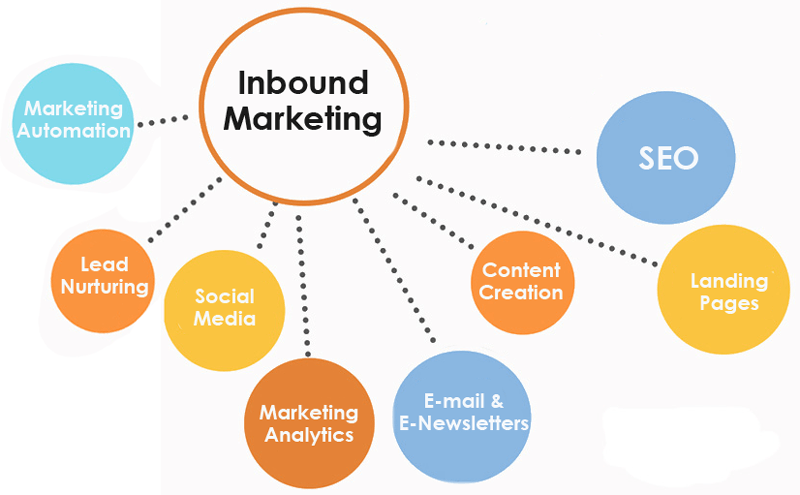
By creating content designed to address the problems and needs of your ideal customers, you attract qualified prospects and build trust and credibility for your business.


Inbound Marketing Strategies

These strategies will help you effectively market to your target audience the inbound way. Below, you’ll see there are specific strategies for each inbound method of attracting, engaging, and delighting consumers to help your business grow better.

Attracting Strategies

Inbound marketing strategies that attract your target audience and buyer personas are tied to content creation and development.
To reach your audience, start by creating and publishing content — such as blog articles, content offers, and social media — that provide value. Examples include a guide on how to use your product, information about how your solution can solve their challenges, customer testimonials, and details about promotions or discounts.

Engaging Strategies

When using inbound strategies to engage your audience, ensure you’re communicating and dealing with leads and customers in a way that makes them want to build long-term relationships with you. When using these engagement strategies, inject information about the value your business will provide them with.
Specific engagement strategies may include how you handle and manage your inbound sells call. Focus on how customer service representatives handle calls from interested people and prospects. Additionally, be sure you’re always solution setting rather than product selling. This will ensure all deals end in mutually beneficial agreements for customers and your business — meaning, you provide value for your right-fit customers.

Delighting Strategies

Delighting inbound strategies ensure customers are happy, satisfied, and supported long after they make a purchase. These strategies involve your team members becoming advisors and experts who assist customers at any point in time.
Incorporating thoughtful, well-timed chatbots and surveys to assist, support, and request feedback from customers is a great way to delight these people. Bots and surveys should be shared at specific points in time throughout the customer’s journey to ensure they make sense and are of value.

NAME:- TUSHAR WAMAN

CLASS:- SY-BBA-IB

ROLL NO:- 382

WHAT IS ONLINE PR

Online Public Relations (E-PR, Digital PR) functions the web relationship influence among the cyber citizens and it aims to make desirable comments about an organization, its products and services, news viewed by its target audiences and lessen its undesirable comments to a large degree.[1] Online public relations shows differences from traditional public relations. One of these is associated with its platforms. Compared with traditional public relations channels (such as TV, radio and printed press), the network systems used for online public relations vary from search to social platforms.[2] In the era of digital marketing, the major online public relations tools for the public relations professionals and marketers such as content marketing, search engine optimisation are the results of mixture of digital technologies and public relations. Those approaches have become the mainstream digital marketing machines and learning to take advantage of these marketing tools is an essential part of modern public relations strategies.[3][4]Differences between online and traditional public relations

The organizations can communicate with its audiences directly through a variety of online platforms instead of depending on the media channels only

Audiences exposed to the information are linked to the network and then the flow of information is multi-directional among people

Multiple sources of information provided can be accessible to audiences

Differences between online and traditional public relations

The organizations can communicate with its audiences directly through a variety of online platforms instead of depending on the media channels only

Audiences exposed to the information are linked to the network and then the flow of information is multi-directional among people

Multiple sources of information provided can be accessible to audiences

NAME:- TUSHAR WAMAN

CLASS:- SY-BBA-IB

ROLL NO:- 382

WHAT IS MAEKETING AUTOMOTION

marketing automation

Marketing automation is a type of software that allows companies to effectively target customers with automated marketing messages across channels including email, websites, social media and text messages to generate sales leads.Marketing automation is a type of software that allows companies to effectively target customers with automated marketing messages across channels including email, websites, social media and text messages to generate sales leads. The technology is a segment of customer relationship management, or CRM, and is typically used by marketing departments as a way to remove repetitive tasks from staff workflows and increase overall marketing efficiency.

Marketing automation features

Marketing automation software manages the online element of a marketing campaign, including data analytics that can create more precise personalization of content to individual customers to drive engagement and revenue.

Artificial intelligence (AI) applications such as chatbots can help automate the delivery of that information or direct potential customers to webpages, online documents or forms that help create sales or gauge a potential customer’s current or future interest in purchasing a company’s goods or services. Marketing automation tools can also administer customer satisfaction and product usage surveys and then collect, measure and segment the response data.

CRM software has evolved to the point that marketing teams can now use AI in automated tools to hyper-personalize marketing messages.

The main features of marketing automation software typically include:

Account base marketing

Analytics for CRM

Campaign management

Inbound marketing

Lead management

Marketing ROI

Targeting and segmentation

Social marketing

AME:- TUSHAR WAMAN

CLASS:- SY-BBA-IB

ROLL NO:- 382

WHAT IS NATIVE MARKETING

Native advertising is a type of advertising , mostly online , that matches the form and function of the platform upon which it appears. In many cases it functions like an advotorial and manifests as a video, article or editorial.The word “native” refers to this coherence of the content with the other media that appear on the platform.

Native advertising is produced by an advertiser with the specific intent to promote a product while matching the form and style which would otherwise be seen in the work of the platform’s editorial staff.

An important aspect of advertising in general is net impression, which is a reasonable consumer’s understanding of an ad. The power within native advertising, however, is to inhibit a consumers’ ad recognition by blending the ad into the native content of the platform, making many consumers unaware they are looking at an ad to begin with. The sponsored content on social media, like any other type of native advertising, can be difficult to be properly identified by the Federal Trade Commission because of the rather ambiguous nature. Native advertising frequently bypasses this net impression standard, which makes them problematic.

Product placement (embedded marketing) is a precursor to native advertising. Instead of embedded marketing’s technique of placing the product within the content, in native marketing the product and content are merged.

While there is, to a degree, a merger of advertising and content, native advertising is legally permissible in the US to the extent that there is sufficient disclosure.

NAME:- TUSHAR WAMAN
CLASS:- SY-BBA-IB

ROLL NO:- 382

WHAT IS PAY-PER-CLICK

What is PPC?

PPC stands for pay-per-click, a model of internet marketing in which advertisers pay a fee each time one of their ads is clicked. Essentially, it’s a way of buying visits to your site, rather than attempting to “earn” those visits organically.
Search engine advertising is one of the most popular forms of PPC. It allows advertisers to bid for ad placement in a search engine’s sponsored links when someone searches on a keyword that is related to their business offering. For example, if we bid on the keyword “PPC software,” our ad might show up in the very top spot on the Google results page.
Every time our ad is clicked, sending a visitor to our website, we have to pay the search engine a small fee. When PPC is working correctly, the fee is trivial, because the visit is worth more than what you pay for it. In other words, if we pay $3 for a click, but the click results in a $300 sale, then we’ve made a hefty profit.
A lot goes into building a winning PPC campaign: from researching and selecting the right keywords, to organizing those keywords into well-organized campaigns and ad groups, to setting up PPC landing pages that are optimized for conversions. Search engines reward advertisers who can create relevant, intelligently targeted pay-per-click campaign by charging them less for ad clicks. If your ads and landing pages are useful and satisfying to users, Google charges you less per click, leading to higher profits for your business. So if you want to start using PPC, it’s important to learn how to do it right.

PPC Keyword Research

Keyword research for PPC can be incredibly time-consuming, but it is also incredibly important. Your entire PPC campaign is built around keywords, and the most successful Google Ads advertisers continuously grow and refine their PPC keyword list. If you only do keyword research once, when you create your first campaign, you are probably missing out on hundreds of thousands of valuable, long-tail, low-cost and highly relevant keywords that could be driving traffic to your site.
An effective PPC keyword list should be:

Relevant – Of course, you don’t want to be paying for Web tariff that has nothing to do with your business. You want to find targeted keywords that will lead to a higher log click through rate , effective cost per click, and increased profits. That means the keywords you bid on should be closely related to the offerings you sell.

Exhaustive – Your keyword research should include not only the most popular and frequently searched terms in your niche, but also to the long tell of research Long-tail keywords are more specific and less common, but they add up to account for the majority of search-driven traffic. In addition, they are less competitive, and therefore less expensive.

Expansive – PPC is iterative. You want to constantly refine and expand your campaigns, and create an environment in which your keyword list is constantly growing and adapting.

If you want to find high-volume, industry-specific keywords to use in your PPC campaigns, be sure to check out our popular keyword.

NAME:- TUSHAR WAMAN

CLASS:- SY-BBA-IB

ROLL NO:- 382

WHAT IS CONTENT MARKETING AND ITS TYPES

Definition. The Content Marketing Institute defines content marketing as: … a strategic marketing approach focused on creating and distributing valuable, relevant and consistent content to attract and retain a clearly-defined audience — and, ultimately, to drive profitable customer action.say essential here because these come ready-made in your CoSchedule calendar. So let’s check out the basic content types:

Content Types

I say essential here because these come ready-made in your CoSchedule calendar. So let’s check out the basic content types:

1. Articles

You likely have company news, product announcements, and a ton of other stories that deserve to be told. Like a traditional newspaper or mahine published article, you can, too.
As Joe Pulizzi, the godfather of content marketing likes to say, companies ate now publisher. So it’s perfectly acceptable for marketers to borrow ideas from the traditional publishing world to better engage their audiences.

2. Audio

While podcasting is becoming more popular, there’s also a lot of opportunity to turn the written word into audio content.
With easy-to-use tools like Audacity you can record yourself reading your e-books, blog posts, and course lessons out loud, host the audio on a service like Libsyn , and embed the audio files in your content with podcast plugins like the Podcast player own we use on the CoSchedule blog, or the Smart podcast player from plat from flaynn

3. Blog Posts

Blog content can take many different formats—how to, list, question, why, etc.—and usually serves to educate prospect customers. Blog posts are usually at least 1,500 words lomg and help your audience solve a problem on their own, empowering them to become amazing at what they do (and subsequently give them more reason to use the product or service you’re selling).

4. Case Studies

A case study shares a customer’s success story they experienced when using your product or service. These can take multiple different formats like video or written word, and are a robust testimonial that encourages prospective customers to consider your business as they look to resolve similar challenges.

A common formula for case studies covers what the problem was before implementing a change, how the customer changed, and what the results were after the change.

5. E-Books

E-books are an excellent way to break up long-form content into digestible chapters. An easy way to start an e-book is to select existing blog posts that flow logically together to repurpose your existing content.

6. E-Courses

From my experience at CoSchedule, there has been no higher-converting content type for trial signups than our free e-course. While e-courses take many formats, our Marketing Strategy e-course offered five written lessons (complete with quizzes), two intensive workshops, and helped students connect with one another in a course-dedicated Facebook group. Upon completion, our students could get certified only if they shared their completed marketing strategy with us.

NAME:- TUSHAR WAMAN

CLASS:- SY-BBA-IB

ROLL NO:- 382

DISADVANTAGES OF E-COMMERCE

Technical Disadvantages

  • There can be lack of system security, reliability or standards owing to poor implementation of e-commerce.

  • The software development industry is still evolving and keeps changing rapidly.

  • In many countries, network bandwidth might cause an issue.

  • Special types of web servers or other software might be required by the vendor, setting the e-commerce environment apart from network servers.

  • Sometimes, it becomes difficult to integrate an e-commerce software or website with existing applications or databases.

  • There could be software/hardware compatibility issues, as some e-commerce software may be incompatible with some operating system or any other component.

Non-Technical Disadvantages

  • Initial cost − The cost of creating/building an e-commerce application in-house may be very high. There could be delays in launching an e-Commerce application due to mistakes, and lack of experience.

  • User resistance − Users may not trust the site being an unknown faceless seller. Such mistrust makes it difficult to convince traditional users to switch from physical stores to online/virtual stores.

  • Security/ Privacy − It is difficult to ensure the security or privacy on online transactions.

  • Lack of touch or feel of products during online shopping is a drawback.

  • E-commerce applications are still evolving and changing rapidly.

  • Internet access is still not cheaper and is inconvenient to use for many potential customers, for example, those living in remote villages.

    NAME :- TUSHAR WAMAN
    CLASS:- SY-BBA-IB
    ROLL NO :- 382

11 Essential Marketing Strategies for Your eCommerce Business

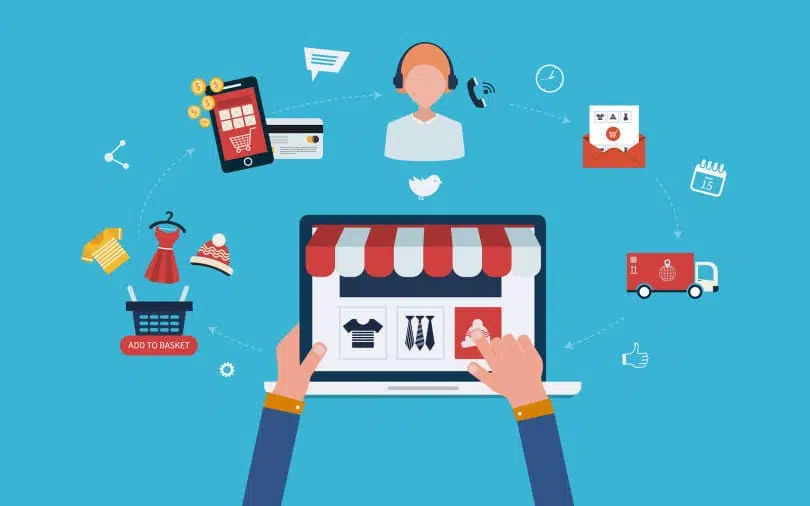
maintaining a well-established customer base, it’s important to stay up to date with the most current marketing trends and techniques for your eCommerce business. Structuring and finally launching an eCommerce website is a milestone achievement for your brand. Therefore, it’s crucial to invest in an effective website structure and marketing strategy.

If you’re interested in finding out the best tried-and-true methods, as well as the newest techniques of marketing for an eCommerce business, pay attention to the 11 tips below:
11 Essential Marketing Strategies for Your eCommerce Business

1. Produce Original Content

The first step in setting up an eCommerce website is creating the content for it. Creating high-quality and original content will set you up for success because it will resonate with your customers in a way that makes them want to interact with you, purchase from you, and maintain a following.

Be creative. Be original.

Promoting original content is a great way to make a statement, strike a compelling idea, and make a mark on the user’s mind. There is a fine line between content that engages users and content that deters them. Why not take an extra step, put in a little effort, and create something that will be genuinely compelling?

2. Optimize your website layout

After launching your e-commerce site, it’s important to test your website’s layout, language, and placement of conversion elements. When customers visit your website, you want to make sure it’s easy and simple to check out — that they feel naturally inclined to purchase your products and that it’s abundantly clear how to do so.

You should test the language displayed on your landing and product pages, the language in your conversion elements, and even the strategic placement of icons and elements. One really nifty tool is Mouseflow — a free heatmap software that reveals valuable patterns in customer behavior on your website. One of their most popular heatmaps, the movement heatmap, reveals the most attractive parts of your website — based on visitor movement data to your website.

11 Essential Marketing Strategies for Your eCommerce Business

With a color guide, Mouseflow will tell you where your customers spend the most time, and the least amount of time! If a specific area of your page receives more attention (in white), you should consider moving your conversion elements to those more attractive areas. Test it for a week and see how your conversions change. Mouseflow’s heatmaps can help improve your conversions, increase sales, and keep prospects interested. Mouseflow is truly one of your competitor’s best kept secrets — and they offer a free account, so there’s no cost to you.

3. Content Marketing

Proper content marketing can attract more positive attention, interaction, and sustainable conversions in a way no other marketing method can. By creating and promoting original content, you are ensuring that your audience is receiving new information that matters to them on a continual basis.

Brainstorm with your team to create a list of the different types of content you wish to create, such as blog posts, videos, and newsletters. Also, make sure you are utilizing your marketing budget by consulting with experts, outsourcing work when necessary, and investing in high-quality software, subscriptions, employees, and training for your team. You will also find that if you work with the right people, many of the things you’ve paid for in the past can be done internally. Create diversity within your team and listen to everyone’s ideas.

We also suggest that you create content based on Pareto’s 80/20 rule, which means that your promotions should comprise of 80% informational content, and 20% promotional content. All of the content you publish should be relevant, interesting, and unique.

11 Essential Marketing Strategies for Your eCommerce Business

4. Social Media Marketing

Social media marketing is a very powerful tool that allows you to communicate with your industry, customers, and market in a personal way. You can utilize social media to generate engagement and interaction, boost traffic to your website, and develop a larger base of customers. Utilizing different social media platforms for different purposes also creates a rich presence for your company that diversifies your abilities, efforts, and will ultimately help you cater to your customers’ needs in a way that grows your business over time.

Maintaining a solid tone and personality of your company through social media is very important because consistency is what will create trust within your audience. In order to develop and maintain brand recognition and authority, make sure your outreach efforts are unified by ensuring your team is on the same page with your company’s communication style.

5. Email Marketing

One of the most effective forms of reaching out to your customer base is through email marketing. Although you have to be very careful about the content within your emails and who is included in your outreach, the reason email marketing has been around for so long is because it works.

In order to reach your audience most effectively, provide useful content within your emails. Make them as personal as you can, offer valuable promotions, and use it as an opportunity to socialize. Open up about what your business is doing, any events you are attending, new features or products, and be transparent about your company. You want to relate to your customers on a level that gauges their interest and keeps them engaging with your emails.

As always, make sure you are monitoring the analytics of your email marketing efforts. One great tool that can help you with this is the Google Analytics Dashboard, which is a free solution that gives you useful data about your email marketing efforts.

You can also track users who entered your website from your email campaigns with the previously mentioned tool, Mouseflow. All you have to do is set a custom URL that users “visit” when entering your site, and their entry page will contain that unique URL. A great way of doing this is to append UTM variables to your URL.

You can use Mouseflow filters or the search feature to find users whose sessions contained your custom URL. From here, you can save and export the list, perform analytics, and watch how they interacted on their site. You can also filter your heatmaps for this data to analyze how they engage with each page of your site, which elements they find most attractive, and more!

6. Search Engine Optimization

One of the most important and manual methods of optimizing a successful eCommerce website is making sure it’s optimized for search engines. With today’s Search Engine Optimization (SEO) standards, it’s now more important than ever to make sure your website is constantly updated with rich and relevant content, promotes a good user experience (UX), and is optimized to be as error-free as possible.

The content within your website should be rich, reliable, and provide information to the public that is useful and relevant to what they’re looking for. For example, if you have an eCommerce store selling camping supplies, it’s wise to provide detailed product information and possibly even host sections of your website that offer generous amounts of content that elaborates on the topics of camping, supplies, or related subjects. Using keywords within your content in a genuine way will also flag your website as a matching result in search engines when users are looking for something specific.

11 Essential Marketing Strategies for Your eCommerce Business

7. Pay-Per-Click Marketing

There are three basic elements to any pay-per-click marketing campaign: the ad, the offer, and the landing page.

All three must be in good harmony and synchronization if you want to maintain the interest of the lead. The landing page must be a continuation of your ad, delivering what was promised as the reward of clicking on the ad, in order to take the visitor through your conversion funnel. It must also be customized for keywords to appear somewhere near the top of search engine results.

Keep the landing page free of distractions and unnecessary bells and whistles. Also, keep in mind that your landing page is the most appropriate place to boast your product benefits to the customer.

11 Essential Marketing Strategies for Your eCommerce Business

8. Optimize Your Marketing Efforts for Mobile Devices

It is absolutely crucial to make sure your website is responsive to any user layout. Mobile users are starting to dominate the sea of internet use, and it’s important to accommodate their needs to provide a good user experience (UX) for everyone.

People who visit your website do not want to be redirected to an app or web version of your website, they want the full-meal-deal. So, make sure you deliver what they are expecting and make the investment to enhance your website so that it’s fully responsive.

You can also use mobile marketing techniques to target mobile users specifically. One of the most popular marketing trends is called geo-targeting, which advertises to mobile users based on their location. This technique enables you to reach out to customers who are within a specific distance of your business, and provide them with an incentive to stop by or make a purchase.

11 Essential Marketing Strategies for Your eCommerce Business

9. Target Wearable and VR Technology

Targeting wearable and Virtual Reality (VR) technology is a trending technique that grabs users in a new and exciting way. People are still getting used to this technology, and are not yet overwhelmed by or habituated to advertisements.

Your target audience for these mediums will be very refined, as these users are the part of the population that carries the latest technology at the palm of their hands at all times, keeps up to date with trends, and doesn’t mind dropping some extra cash for items they desire. Although creating campaigns that are designed for these technologies can be expensive, the right approach can be worth the initial investment because a filtered audience is more likely to convert.

10. Launch Stores on Multiple Platforms

Consumers have become the power player in the eCommerce industry, which means your business needs to stand out in a unique way. Because of this, it’s more important than ever to customize your user experience (UX) to cater to the needs of your audience.

Make your outreach efforts personal by taking the time to learn about your customers. People love it when they feel special, and if you make sure to add personal touches like addressing your prospects by name, sharing videos and pictures of your employees, and being transparent about your company processes and procedures, you will reap the benefits of a loyal customer base. All of this will add to the overall ‘face of the business’ and will hopefully make its way to the hearts of your customers.

11. Retargeting

Customers who have already shown an interest in your website are more likely to make a later purchase. Retargeting is a technique that tracks customers who have visited your website and displays ads to them while they’re browsing the internet with the intent of getting them back on your website. When these visitors enter your website again, they are far more likely to make a purchase.

To effectively manage a retargeting campaign, make sure your ads are as specific as possible. Was the customer looking at a specific product? Make sure the ads displayed to them are ads of that specific product and link to the page of the product. Just like with Search Engine Optimization (SEO) and Pay Per Click (PPC) marketing, it’s important to display the information the user is looking for the instant they click on your ad. If they click on an ad for hiking boots and are redirected to the home page of your camping website, they aren’t going to be thrilled. But, if they are directed to the exact hiking boots they were considering, or even had added to their cart, before leaving your website, they will be much more likely to continue with a purchase.

WHAT IS THE USE OF GOOGLE AD WORDS

Premium Managed WordPress Hosting

KINSTA BLOG

How to Use Google AdWords for Your Business (Beginner’s Guide)

By Sahil Kakkar • Updated on August 21, 2019

Running an online business is no joke, especially when you have to compete with giants like Amazon that have an endless marketing budget fuelling their advertising. The race to reach the first page of Google search results is highly competitive. Trying to reach the first page, even with excellent SEO may easily take months or even a year.
This is where paid ads (PPC) come in. Google AdWords is Google’s advertising service that allows businesses to display their ads on Google’s search result pages. The ads usually appear at the top or bottom of a Google SERPs (search engine result pages).

Using Google AdWords is a common and effective marketing strategy among businesses looking to get their first online customers. Today we’ll dive into some of the basics on how to use Google AdWords for your business.

NAME:- TUSHAR WAMAN

CLASS:- SY- BBA-IB

ROLL NO:- 382

WHAT IS SEO AND TYPES OF SEO

Search engine optimization is the process of increasing the quality and quantity of website traffic by increasing the visibility of a website or a web page to users of a web search engine. SEO refers to the improvement of unpaid results and excludes direct traffic/visitors and the purchase of paid placement.

There are three types of SEO:-

you need for a well-rounded organic search strategy: on-page SEO, technical SEO, and off-page SEO.
By breaking down your strategy and thinking about SEO as these three categories, it will be much easier to organize and execute your optimization plans.
In this post, we’ll review each type of SEO and how they are important to your overall marketing strategy. Plus, we’ll show you different types of SEO tools that can help you improve your performance in each category.

The 3 Types of SEO:-

On-Page SEO:-

On-page SEO relates to the content on your website.
It includes strategies to optimize an individual page on a website. These factors (all of which are outlined in this on-page SEO checklist) help search engines understand the topic of the content and see that the website is a valuable source that people would want to find.
This type of SEO includes:

Keyword research: Finding the best keywords to target on a page of content

Content creation: Publishing high-quality content focused on target keywords

Keyword optimization: Using the target keyword in all the right places and using good meta tag SEO.

Alexa has tools to help with all aspects of on-page SEO. For keyword research and content creation, use our Keyword Difficulty Tool to find relevant, popular, low-competition keywords to target on your site.

For keyword optimization, use our On-Page SEO Checker to do a full review of individual pages on your site and see if they are fully optimized for your target keyword. Enter the target keyword and URL to receive a report with missed optimization opportunities and tips for improvement.

Technical SEO:-

Technical SEO relates to non-content elements of your website.
It includes strategies to improve a site’s backend structure and foundation. Technical SEO improves a site’s readability (which makes it easy for search engines to crawl and understand the site) and provides a good user experience, which helps search engines see that the site is high quality. A good user experience is also important for readers, and can affect overall traffic and engagement rates.
The types of SEO included in this category relate to:

Site speed

Mobile-friendliness

Indexing

Crawlability

Site architecture

Structured data

Security

An easy way to check on the state of your technical SEO is by using Alexa’s SEO Audit Tool. Enter your site to receive a report on the status of multiple technical elements along with instructions for how to resolve issues if you have any.

Boost your search performance using proven techniques. Download our free ebook White Hat SEO Techniques: It’s Not About Gaming Google.

Off-Site SEO:-

Off-page SEO techniques help strengthen the influence and relationship your website has with other websites.
It includes strategies to build a website’s reputation and authority. These factors help search engines see that a website is an ideal search result because it is from a reputable, reliable, trusted source.
Most off-site SEO relates to high–quality backlinks. A large volume of links pointing to your site from relevant, authoritative sites shows search engines that your site is valuable and established Click & Tweet! . You can gain these trust signals through a variety of link building and guest posting tactics.
To create a link building plan, use Alexa’s Competitor Backlink Checker. Enter up to 10 URLs of competitor sites and receive a report with all of the links pointing to your competitors. Use this competitive analysis to get ideas for how you can build links to the same sites.

To create a guest posting plan, use Alexa’s Audience Overlap Tool. Enter your website or a site that has an audience you want to attract and receive a map of other sites that share the same audience. This report supports guest blogging outreach strategies, as it gives you a long list of sites that would be good opportunities to gain links and reach your target audience.

You can also use the information you uncovered with the backlink checker to find guest blogging opportunities. Look for sites where your competitors have submitted guest posts and try to do the same for your brand.